
赌神
[거제소식] 전국해양스포츠제전 최종 취소 결정 등_我的网站

一 | [거제=뉴시스] 신정철 기자= 오는 27일부터 30일까지 거제시 일운면 일원에서 개최 예정이었던 제18회 전국해양스포츠제전이 집중호우 피해 영향으로 최종 취소가 결정됐다.사진은 제18회 전국해양스포츠제전 포스터.(사진=뉴시스DB).2026.08.26. [email protected][거제=뉴시스] 신정철 기자 = 경남 거제시는 오는 27~30일 시 일운면 일원에서 개최 예정이었던 제18회 전국해양스포츠제전이 주관부서인 해양수산부가 지난 25일 최종 취소를 결정했다고 밝혔다.시는 지난 18일 집중호우 피해 상황과 대회 개최 여건 등을 종합적으로 검토해 해수부와 경남도에 대회 취소를 건의했으며, 해수부의 최종 승인을 거쳐 취소가 확정됐다.거제시는 지난 15~ 18일 거제 지역의 극한 호우로 거제시 전역이 피해를 입은 상황에서 이번 결정은 불가피했고, 시민들의 일상 회복을 최우선에 두고 관련 후속 조치를 차질없이 추진하겠다는 방침이다.◇거제시체육회·구례군체육회, 둔덕면 수해 복구 현장서 '구슬땀' 거제시체육회와 자매결연도시인 전북 구례군체육회가 최근 집중호우로 큰 어려움을 겪고 있는 거제시 수해 현장을 찾아 구슬땀을 흘리며 복구를 도왔다.거제시체육회와 구례군체육회는 지난 24일 수해 피해가 심각한 거제시 둔덕면 일대 농가에서 합동 수해 복구 자원봉사 활동을 진행했다. [거제=뉴시스] 신정철 기자= 거제시체육회와 자매결연도시인 전북 구례군체육회가 최근 집중호우로 큰 어려움을 겪고 있는 거제시 수해 현장을 찾아 구슬땀을 흘리며 훈훈한 연대의 정을 나눴다.사진은 지난 24일 거제시 둔덕면 일대 포도 농가에서 수해 복구 자원봉사 활동 모습.(사진=거제시 제공).2026.08.26. [email protected] *재판매 및 DB 금지이날 현장에는 거제시체육회 김환중 회장을 비롯해 부회장단, 이사진, 종목별 회장, 거제시 18개 면·동 체육회장 및 임직원들이 참여해 피해 복구에 총력을 기울였다.。
Ecological restoration
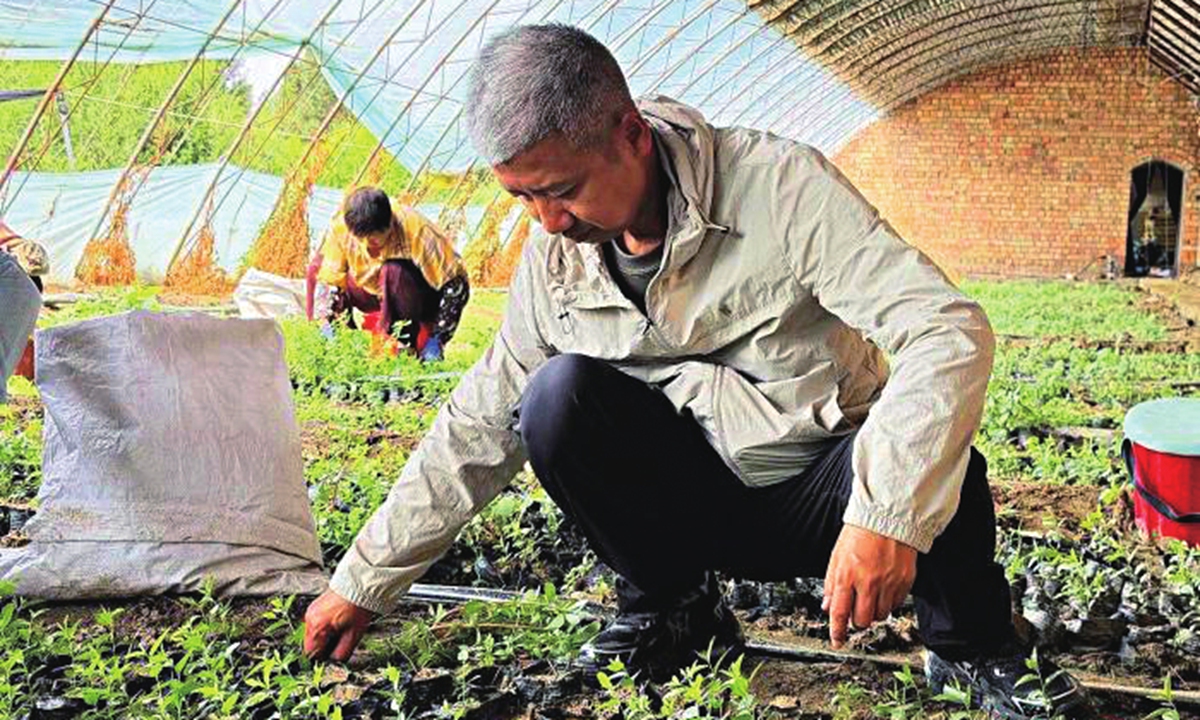
For over 30 years, Wensuyalatu, a member of the leadership group of the Urad Rear Banner forestry and grassland bureau, has made the Gobi Desert his workplace, dedicating his life to combating desertification, advancing ecological restoration through technological innovation, and helping local herders increase their incomes, according to the local bureau's official WeChat account.
Located on the edge of the desert in Bayannur's Urad Rear Banner, it is a key area in China's Three-North Shelterbelt Forest Program, a major ecological project aimed at strengthening the country's northern ecological security barrier.
However, early afforestation efforts in the desert were far from easy at the start.
The project covers 103,800 mu (about 6,920 hectares), including comprehensive treatment of 24,500 mu of desertified land, ecological restoration of 4,100 mu of non-desertified land, and 75,200 mu of enclosed grassland restoration. The project also includes the construction of 11 small-scale water conservation facilities, all of which required strict standards and extensive coordination.
The project also includes the construction of 11 small-scale water conservation facilities, all of which required strict standards and extensive coordination.
In 1991, Wensuyalatu, then in his early 20s, chose to devote himself to forestry and grassland conservation in the Urad Rear Banner. Since then, he has remained on the front lines of desertification control, witnessing the region's harshest environmental challenges and working to find solutions adapted to the fragile desert ecosystem.
In the early years, afforestation in the Gobi Desert was an extremely difficult task. The most critical planting season in spring often coincided with the strongest sandstorms of the year. Every year during the key afforestation period, Wensuyalatu would stay deep in the desert, guiding workers on planting techniques and management practices, while carefully overseeing every detail of the ecological restoration projects.
"Every spring, the wind and blown sand were so strong that it was hard to keep your eyes open. The sand hit your face like needles. During the day, we followed workers to dig holes and plant trees, and at night we stayed in temporary shelters to organize data and review the day's work. That was the normal routine for desertification fighters," Wensuyalatu recalled.
The road to restoring the desert was far from easy. Years of drought, low survival rates of seedlings, and skepticism from some local residents created major obstacles.
"At the beginning, it was really difficult. The climate was extremely dry, and many seedlings died after being planted. Some herders did not understand or support the work. They believed deserts were naturally barren and that no amount of effort could make trees grow there," Wensuyalatu said.
To change these perceptions, Wensuyalatu brought local residents to see firsthand the damage caused by desert expansion. Through visible results and long-term communication, he gradually won the understanding and support of the community.
Facing the ecological challenges of the Urad Rear Banner, Wensuyalatu began exploring new approaches beyond traditional restoration methods.
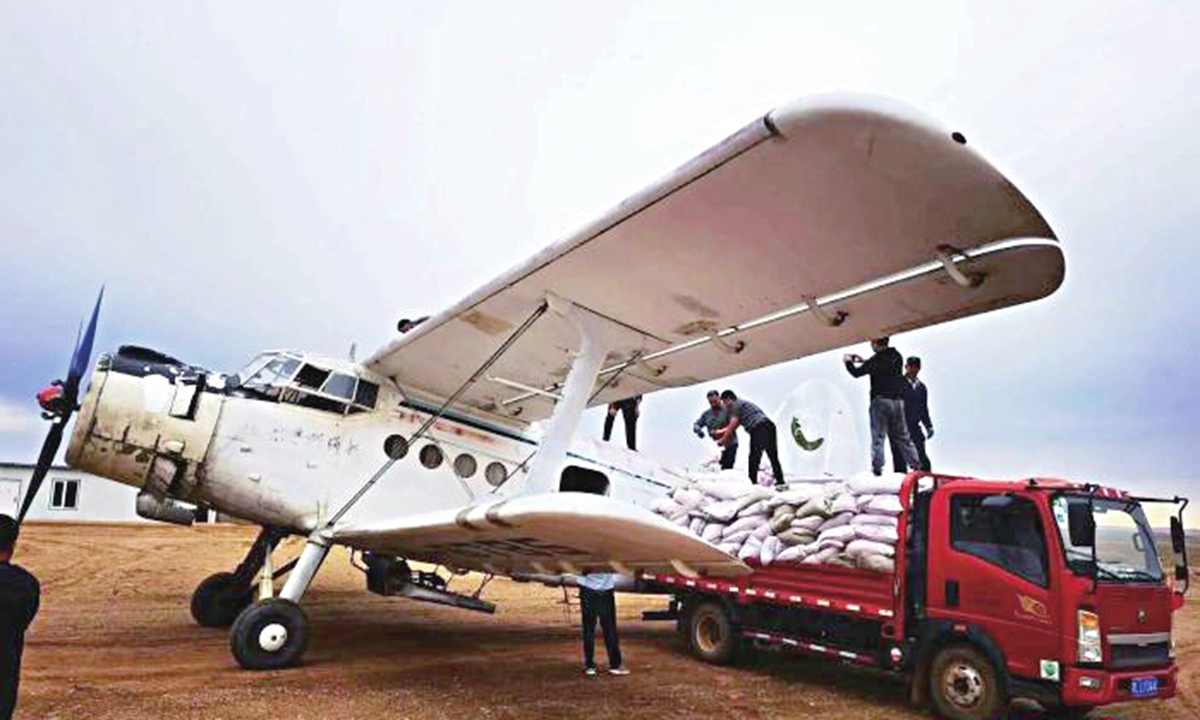
Since 2004, he has led efforts to tackle desert restoration challenges by introducing large-scale aerial seeding projects, creating a breakthrough approach for restoring degraded desert ecosystems in the region.
"Compared with traditional methods, aerial seeding is more efficient and can cover wider areas. Based on local climate and soil conditions, we select suitable desert plant seeds and precisely control the seeding height, density and timing to improve survival rates as much as possible and accelerate desert recovery," Wensuyalatu explained.
After years of effort, the aerial seeding projects under Wensuyalatu's leadership have restored more than 800,000 mu of desert land, with an effective restoration rate of 62.2 percent.
He also developed an integrated management approach combining "protection, management, retreat, restoration and publicity," establishing a mixed vegetation system of trees, shrubs and grass to curb desert expansion and reduce sandstorms at their source.
Beyond restoring greenery, Wensuyalatu has also focused on strengthening scientific research and protecting native desert species.
Starting in 2010, he devoted himself to the artificial cultivation of endangered native desert plants. After more than a decade of repeated experiments, he successfully developed cultivation techniques for rare species such as the endangered evergreen broadleaf shrub Ammopiptanthus mongolicus, Mongolian almond and drought-resistant elm.
Under his leadership, his team cultivated 6.5 million seedlings and completed more than 4,000 mu of high-quality afforestation projects, with seedling survival rates consistently exceeding 80 percent.
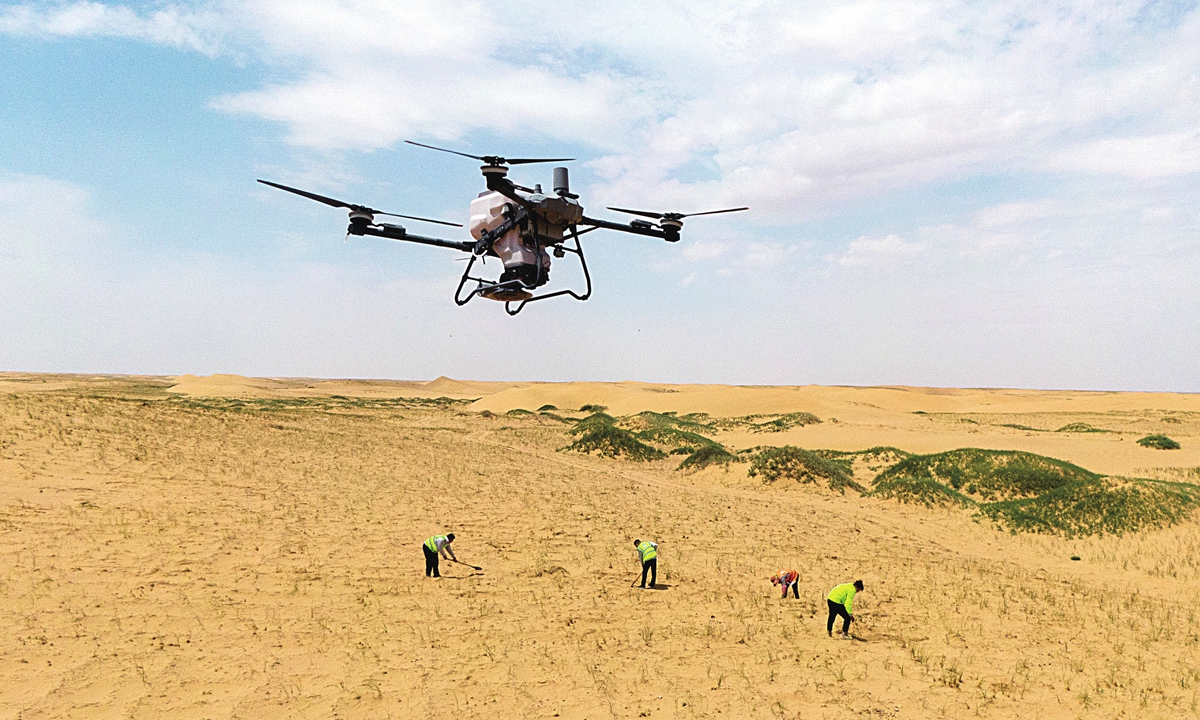
For Wensuyalatu, desert restoration is not only about creating ecological benefits, but also about improving people's livelihoods.
He has long promoted the idea that "trees should bring both ecological value and economic value." By leveraging local desert resources, he helped establish a 10,000-mu industrial base for desert plants and cistanche - a medicinal plant often grown in desert environments - across four key local villages, integrating ecological restoration with specialty desert industries.
"In the past, people thought desertification control was simply about planting trees - it took a lot of efforts but brought little income. Now things are different. By planting trees and developing industries such as cistanche cultivation, desert land can generate real wealth," a local herder said.
To ensure that local communities benefit from ecological development, Wensuyalatu introduced enterprises, supported family forest farms and professional cooperatives, and promoted large-scale, market-oriented operations.
The once barren desert has gradually become a "green treasure chest" for local herders, achieving a win-win outcome: greener landscapes, improved ecosystems, stronger businesses and higher incomes.
"Desertification control is not just an ecological project, but also a project that benefits people," Wensuyalatu said.
"Only when communities gain real benefits from protecting nature will they actively participate in ecological conservation. That is the key to making restoration efforts sustainable and achieving the vision that lucid waters and lush mountains are invaluable assets," Wensuyalatu said.
Global Times
。

二 |
Current article:http://3qczmtc.dingruorenhongqiaminmeipeiliu.cyou/news/20260826_9670.html
Published on:07:22:01
- 东风日产向车主致歉:因服务器机房电力故障,导致车主APP登录、远程控制等线上功能出现无法使用的情况,目前正在全力抢修
- 卡福:阿诺德对皇马来说会是很棒的签约,他和卡瓦哈尔很像
- 独占历史第一!姆巴佩世界杯总进球达到22球
- 华硕 ROG Xbox Ally X20 掌机价格公布:1299 美元起,升级 7.4 寸 OLED 屏
- 双修!斯图尔特社媒晒休赛期片段:篮球训练加干农活
- 首购低至 7.9 元,阿里云百炼Coding Plan火的一塌糊涂!
- 济南CBD新商街雏形初现 部分商家率先入驻经营
- 九省区将实现高频不动产登记业务“跨省通办”
- 台风“梅花”来势汹汹,官兵严阵以待!
- 湖媒曝库明加交易进展:非常有信心下周前完成
- 5月销量榜 这3家中国品牌超大众丰田成前三 新势力第一曾经很低调
- 防御台风“白海豚” @市民朋友们,请查收这份提示
- Tollywood Lacks Unity: Thaman at Akhanda 2 Success Meet
- South Korea, US, Japan hold trilateral aerial exercise
- 围观!2022年“最轻”超极笔记本推荐:轻身体强性能,你喜欢吗?_Envy_戴尔
- 《GTA6》遭超大泄露!R星愤怒抓捕泄密者 遭疯狂玩梗
- 西班牙5000万美元夺冠奖金,还要向美国交税
- 奔驰“天价”补偿鼓励员工离职,此计划不涉及中国市场
- AI算力迈入“集群时代”!沐曦股份上架的不只是“超节点”|直击WAIC 2026
- 日行万步助健康 加快速度更有益